There is no single right answer. But there is a right way to decide, and a rhythm that keeps any plan useful once it is written.
One of the first questions business leaders ask us is how far ahead their marketing plan should look. Twelve months? Three years? Just the next quarter?
The honest answer is that it depends. The right horizon is shaped by the size of the business, what it is trying to achieve, and the industry it operates in. What does not change is that any marketing plan has to sit inside the wider organisational plan, and it has to be reviewed often enough to stay relevant.
Start with the organisational plan
A marketing plan is not a standalone document. It is the marketing response to the business plan.
If the business has a three year goal to enter a new market or double a particular service line, the marketing plan needs to show how it supports that over the same period. If the business is planning year to year, a marketing plan that tries to look five years ahead will not hold. The marketing horizon should follow the business horizon, not lead it.
This is also why marketing plans so often end up on a shelf. When they are written without reference to the business plan, they quickly drift away from what leadership actually cares about.
What shapes the right length
Three factors tend to matter most.
- Size and stage. A business just starting out benefits from a shorter, tighter plan, because it will learn quickly and needs room to adjust. An established business with a clear direction can plan further ahead with more confidence.
- What you are trying to achieve. Building brand awareness in a new market takes longer than filling a sales pipeline for an existing service. Longer term goals need a longer view, with clear milestones along the way.
- Your industry and sales cycle. Where buyers take months to decide, as in mining services, professional services or infrastructure, the plan needs to account for that lag. Where decisions are fast, as in many e-commerce businesses, shorter cycles of testing and adjusting make more sense.
For most growth stage businesses we work with, a 12 month plan is the right core, sitting inside a broader two to three year direction.
In practice, that looks different depending on where a business is:
- A business preparing to launch is usually best served by a detailed plan for the first six months, covering positioning, brand, website and launch activity, with a lighter outline for the six months after. It will learn a great deal in those early months, and the second half of the year should reflect that learning.
- An established business ready to scale can work with a full 12 month plan, set inside a two to three year direction. The longer view guides bigger decisions such as brand investment and new markets, while the annual plan sets the specific priorities.
- A business entering a new market or sector often needs an 18 to 24 month view. Building awareness and credibility with a new audience takes time, so the plan should include milestones along the way, rather than expecting full results within the first year.
In each case, the plan should be honest about what can realistically be achieved within its timeframe.
What a 12 month plan should contain
A good 12 month plan does not need to be long. It does need to be clear. At a minimum, it should set out:
- The business goals it supports, in commercial terms such as revenue, enquiries or market share.
- The audiences and markets that matter most, and what you want each of them to understand about you.
- The priorities for the year, in the order they will be tackled, with the reasoning for that order.
- The channels and activity that will deliver those priorities, and what will deliberately not be done.
- The budget, broken down so you can see where investment is going and why.
- The measures of success, agreed with leadership and sales, so everyone reads results the same way.
If a plan cannot be summarised on a page or two, it is usually trying to do too much.
The rhythm that keeps a plan alive
Writing the plan is the easy part. Keeping it relevant is where most businesses fall down. The fix is a simple rhythm of review, where each horizon asks a different question.
| Horizon | The question it answers | What it typically covers |
| Monthly | Is the plan being delivered, and is it working? | Performance against agreed KPIs, activity completed, quick adjustments to campaigns and spend |
| Quarterly | Are we on track for the year? | Progress against annual goals, priorities for the next quarter, budget reallocation towards what performs |
| Six-monthly | Does the plan still fit the business? | Changes in the business, market or competitors, and whether priorities need to shift |
| Annually | What should next year look like? | A full review of results, alignment with the updated business plan, and the next 12 month plan and budget |
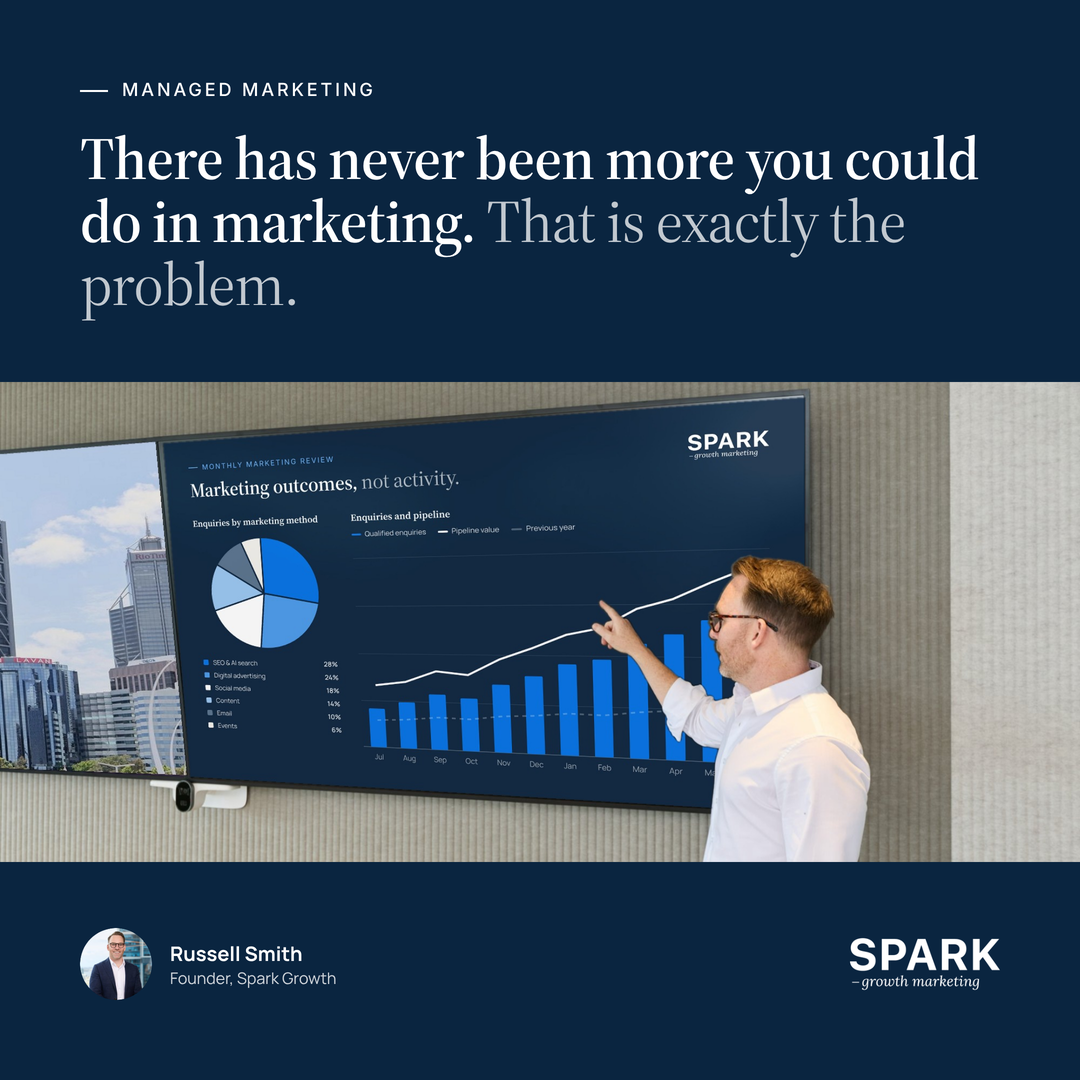
The monthly review is the one that does the most work. For the businesses we partner with, it is a structured meeting with the people who need to make decisions, supported by live dashboards so the conversation is about what to do next rather than what happened.
The quarterly and six-monthly reviews are where a plan earns its keep. They give the business permission to change course when something is not working, without abandoning the plan altogether.
When to revisit the plan early
A regular rhythm of review is essential, but some events justify revisiting the plan sooner. These include:
- Winning or losing a major client that changes the shape of the business
- A significant change in leadership, ownership or structure, including an acquisition
- The launch of a new service, or the withdrawal of an existing one
- A new competitor, or a shift in how buyers in your market make decisions
- Results that are consistently and significantly away from target, in either direction
In these moments, the most useful question is not whether the plan was right. It is whether the plan still reflects the business as it is now. If it does not, adjust it deliberately and tell the people who rely on it, rather than letting activity drift away from what was agreed.
A plan is a tool, not a document
The best marketing plans are not the longest or the most detailed. They are the ones that leadership, sales and marketing all recognise, refer to and update. They connect directly to the business plan, set out the right things in the right order, and are reviewed often enough to stay honest.
If your current plan is sitting in a folder, or you do not have one at all, the right horizon matters less than getting started with something clear and agreed.
Need a plan you will actually use? Every Marketing Foundation we deliver includes a 12 month marketing strategy and budget. Start by scoring your marketing with our free Marketing Maturity Guide, then bring the result to a conversation with Russell.