Buyers are not just searching differently. They are shortlisting, evaluating and choosing differently too. Most businesses have only adjusted for the first of those.
Much of the conversation about AI and marketing focuses on search: whether your business appears in AI answers, and what happens to website traffic. That matters, and we have written about it separately. But it is only the first part of a bigger shift.
AI is changing the whole way people make decisions. It affects how they frame the problem, how they build a shortlist, how they compare options and how they decide who to trust. For any business that sells something considered, whether a professional service, a complex product or a long-term engagement, those changes have consequences well beyond the marketing team.
The old path to a decision
For the past two decades, a considered purchase followed a fairly predictable path. A buyer recognised a need, searched for options, visited a number of websites, read some reviews, asked a colleague or two for recommendations, and then contacted a handful of suppliers. Much of the comparison happened in conversation with those suppliers, who had a real opportunity to shape how the buyer understood the problem.
That path still exists. But AI has inserted itself into almost every step, and in doing so, it has moved a great deal of the thinking earlier, faster and further out of sight.
How people search differently
The first change is in how people ask. Traditional search trained us to type short, compressed phrases. AI tools invite people to describe their situation in full: the size of their business, the problem they are facing, what they have already tried, their budget and their concerns.
That changes what a buyer receives in return. Instead of a list of links to work through, they get an answer shaped to their circumstances. Often that answer includes a framework for thinking about the problem, the questions they should be asking, and the kinds of providers who might help.
In effect, the buyer arrives at the next stage with a clearer, more structured view of their own problem than they would have had before. They have done a version of the discovery conversation that used to happen with a supplier.
How people shortlist differently
The second change is in how a shortlist forms. Where buyers once built a list from search results, referrals and the suppliers they already knew, many now ask an AI tool directly which businesses to consider.
The tool draws on whatever it can find and judge to be credible. Businesses that are described clearly and consistently, that have published genuine expertise, and that are referenced by others tend to appear. Businesses that are vague about what they do, or whose online presence is thin or contradictory, tend not to.
The consequence is that a shortlist may be largely formed before a buyer has spoken to anyone. If your business is not on it, you may never know the opportunity existed.
How people evaluate differently
The third change is in how options are compared. A buyer can now ask an AI tool to summarise what each shortlisted provider offers, compare their approaches, highlight the differences and suggest questions to ask each one.
This makes evaluation faster, and in many ways more rigorous. It also makes it less forgiving. Inconsistencies between what a business says on its website, on LinkedIn and in its published content become easier to spot. Claims that are not supported by evidence carry less weight. Generic language that could describe any provider gives the buyer nothing to distinguish you.
Buyers also arrive at sales conversations better prepared. They may already have a view on pricing, a list of likely risks and specific questions about your approach. The early part of the sales conversation, where a supplier once explained the basics, is increasingly redundant.
How people choose differently
The final decision has changed least, and that is important to understand. When the stakes are high, people still want to trust a person.
AI can help a buyer understand options and narrow a field. It cannot tell them whether they will enjoy working with your team, whether you will be responsive when something goes wrong, or whether your people genuinely understand their business. Those judgements are still made through conversation, recommendation and evidence of how you have treated other clients.
If anything, the human part of the decision has become more concentrated. Because buyers have done more of the research themselves, the conversations they do have with suppliers carry more weight. Each one is closer to the decision, and there is less room to recover from a poor first impression.
What this means for businesses
These shifts have practical implications that reach across marketing, sales and leadership.
- Your positioning has to be unmistakable. If a buyer, or an AI tool working on their behalf, cannot quickly understand what you do, who you do it for and why you are different, you are unlikely to make the shortlist. This is the single most important response.
- Your expertise needs to be visible before the first conversation. Published thinking that genuinely helps buyers understand their problem does two jobs. It makes you more likely to be referenced by AI tools, and it shows prospects how you think before they meet you.
- Your proof needs to be specific. Named client work, clear outcomes and a described way of working carry far more weight than general claims about quality or experience.
- Consistency is now a credibility test. Your website, LinkedIn presence, directory listings, sales materials and the way your team describes the business should all tell the same story. Discrepancies are more easily noticed than they used to be.
- Sales conversations need to start further along. If buyers arrive informed, the first meeting should be about their specific situation, not a general introduction. Sales teams need to be prepared to engage at that level from the outset.
- The human experience matters more, not less. Responsiveness, senior involvement and genuine understanding of the client’s business are the parts of the decision AI cannot replicate. They deserve more attention, not less.
A sales and marketing question, not just a search question
It is tempting to treat all of this as a technical problem for whoever manages the website. That would miss the point.
The changes in how buyers decide affect what marketing produces, how sales engages and how leadership positions the business. They reward businesses whose sales, marketing and delivery teams are aligned on who they serve and why clients choose them. And they expose businesses where those teams are telling slightly different stories.
In that sense, AI has not created a new set of rules. It has raised the stakes on the old ones. Clear positioning, genuine expertise, consistent messaging and a strong client experience have always mattered. The difference now is that buyers can see the gaps more quickly, and they make more of their decision before you have a chance to fill them.
Where to start
A useful first step is to walk through the journey yourself. Describe a typical client’s situation to two or three AI tools, ask which providers they should consider, and then ask the tools to compare the businesses they suggest. Note what they say about you, what they get wrong and what they say about your competitors.
Then put the same question to your sales team. Ask them what buyers know, assume and ask about in first meetings now, compared with a few years ago. The answers will tell you a great deal about where your marketing needs to do more of the work.
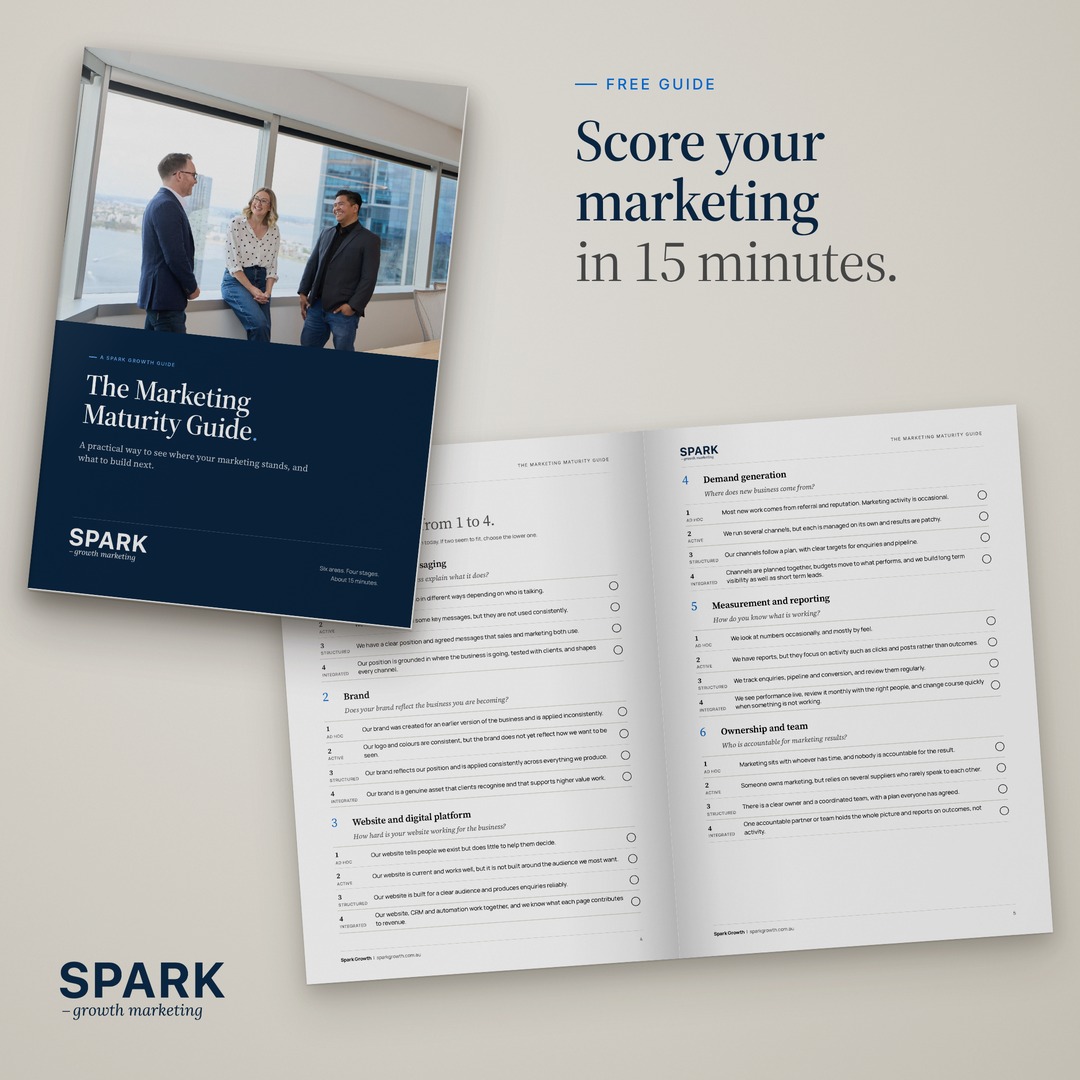
How well does your marketing support the way buyers decide today? Our free Marketing Maturity Guide helps you score your marketing across six areas in about 15 minutes. Bring the result to a first conversation with Russell, and we will tell you honestly whether we can help.